
A Conversation with Matt Monaco – Part I

“Global revolution is rooted in small towns.”
This is one of the messages conveyed in the music of Matt Monaco, an avid environmentalist, urban farmer, and social revolutionary. Through music, Matt unites people in the call to make our world a better place, reminding us of the importance of keeping our arms open and caring for our neighbors.
Having grown up in Hunterdon County, New Jersey, Matt spent his childhood surrounded by nature and playing music. He studied philosophy at Raritan Valley Community College and Montclair State University, and eventually moved to Syracuse, New York. Matt has been using soulful songwriting to spread his message everywhere he goes. In 2015, Matt released an EP titled The Road We Take, centered around his travels, the earth, and social activism. Since then, he’s released several phone demos on his SoundCloud. Though he hasn’t released an EP or album in a few years, Matt has been busy working on projects behind-the-scenes – one of which is an emerging community farm space.
I recently had a conversation with Matt to discuss his activism, his passion for the earth, philosophy, his creative work, and his latest community project. Keep reading to learn his story, and how we can all make small strides towards bettering our community and, in the process, the world.
This article is Part I of a two-part series. To read Part II, click here.
I want to start by asking you about your musical journey. When were you first exposed to music, and when did you start creating your own?
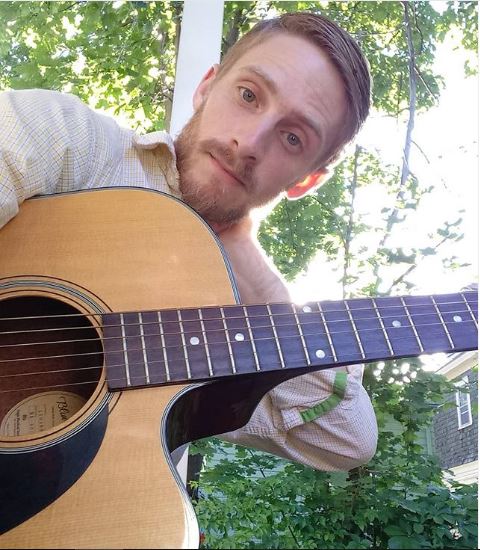
Well, the standard exposures of elementary school, you know, playing recorder and picking an instrument; I picked clarinet and started piano lessons around that time. Elementary and middle school would have been my first formal introduction. I grew up with my grandfather playing a 12-string acoustic guitar and singing little songs here and there throughout my childhood, so that was probably my first real exposure that got me into it. Which was nice, I’m glad it was a 12-string, ‘cause that ended up being what I learned to play guitar on, and it has such a nice sound that it kind of forced me to slow down and learn the chords properly. And then my dad had played guitar and bass and sang a bit. He never did it too much publicly, but we hear it every so often, and it was his old bass that I actually learned on first. I found his old bass and a couple how-to books and sat down in the basement, just playing away, learning the blues scale. That was what got me going.
How would you describe your musical style?
Well, I shared it with a kid down the street last week and he called it “whiskey country,” but that’s maybe one of the newer ones I heard. I would say it came from ska, and reggae, and kind of folk. It really focuses on storytelling, so I have a hard time pinning it down. I’d say I get a lot of my inspiration from folk and reggae, in both the lyricism, the messages of life, and the strumming patterns. I don’t totally know, but I’ve been called everything from reggae-ska to whiskey country. [laughs]
Whiskey country, that’s a new one!
Yeah, I don’t really know what it is, but I’m into it! [laughs]
I’ve seen that lately with a lot of artists, they don’t really stick to a genre anymore, they experiment and play with different things. Everybody has their roots and what’s inspired them, but they don’t really tie themselves down to a certain genre or style anymore.
Yeah, and I think that’s an exciting thing, ‘cause to me that means we’re getting – hopefully – a lot more cross-cultural influence and collaboration. Maybe before it was easy to be a certain genre that’s very clear-cut. But that’s exciting to hear you say that you see more people not sticking to it. And different styles are good for different messages, different feelings, different songs.
Definitely. Who or what is your musical inspiration? Where do you draw your inspiration from?
I’m going to say, as cliché as it may be for a singer-songwriter, but Mother Nature definitely. If I’m sitting by a river, sitting down at the gorge, sitting in the forest, that’s where I can definitely tap into it the best. I think it’s kind of the silence and the white noise of nature and nature-specific sounds.
But as far as musical influences, growing up it would have been Streetlight Manifesto and Green Day. But lately it’s become Nahko from Nahko and Medicine for the People. And honestly, seeing a lot of my friends really develop their sounds, like my friend Chase Gray. I’ve been trying to model a little bit off of his vocals and his fingerpicking, it’s really phenomenal. Also Bug Martin, out of Philly and Flemington I think, he’s got a nice country twang going. So I guess everywhere.
But as far as inspiration to sit down and create, either being out in nature or meeting new people. If I’m out on the road, out in a new town, out at an event for work, just kind of hearing people’s stories, it seems that my music kind of turns into reflections of that.
You released an EP, The Road We Take, in 2015, and have also released several phone demos on your SoundCloud. Many of your songs center around the themes of revolution, growing your own food, and environmentalism. How did your personal philosophy of living off the land and social revolution develop, and how has this philosophy influenced your music?
Thanks for looking up my SoundCloud and pulling out those themes, that’s exciting to hear that what I’m hoping gets across, gets across! [laughs] I’m blessed to have come from a farm family, especially my mother’s side. And on my dad’s side they were Italian immigrants and had gardens, and farms back in the old country. But really hearing my uncle, my grandfather, my grandmother telling stories about the farm, living with my great-great-grandmother on her farm for a bit, and gardening with my dad, that kind of got me into the grow-your-own-food movement – respect the land and it will respect you.
The social justice revolution aspect of it definitely developed more in college I’d say. I always had a sense of seeking out justice in some sense, not always, but it started developing more in college. Reading a lot of care ethics, like works by Virginia Held, John Rawls. And then listening to reggae at the same time, seeing parallels between these really deep, sophisticated thinkers and these island reggae bands, or these DC-based reggae bands, kind of singing about the same things but in lighter terms. It got me realizing that everyone calls for revolution. And that’s all fine and well, but it can also, I think, shut down the conversation if you’re not taking the time to think about it on a personal level. So for me, that revolution is — where I can — taking back control of the foods I eat and sharing with others that knowledge and ability to do so.
My “Revolution” song on SoundCloud…I was at a show at The Stone Pony with my friends from Collective Man, and there’s another band on stage and they’re singing a real angry, hard rock song about revolution and getting worked up, and it’s gonna be this, and it’s gonna be that, and really aggressive in nature. And that’s fine, some people get a drive out of that, but my friend turns to me and he goes, “I gotta say, I like your light-hearted, fun revolution much better.” And that made me happy to hear, ‘cause I really do think it’s about how we treat ourselves, how we treat others, and it’s about how we treat the place we live in.
Speaking of philosophy, you majored in philosophy while you were in college. How has studying philosophy shaped your outlook on life and who you are today? Though you’ve already touched upon it, how has it impacted your music?
There’s a lot of fields of philosophy, a lot of branches, a lot of reasons people get into it, and what really appealed to me was ethics and socio-political philosophy. I guess growing up you’re always trying to figure out, or I was always trying to figure out, why do people say this is right, this is wrong, and this is wrong but this is right? When I took my first ethics class at Raritan Valley Community College, I was exposed to all these great thinkers who had different justifications for when things are right and when things are wrong, and all of them could make sense. So I came out really feeling there’s not necessarily this hard and fast, black and white “this is right, this is wrong,” like maybe we’re encouraged to think.
And then at Montclair [State University], I had a professor who really introduced us to a lot of feminist philosophers, counterparts to the traditionally-taught male philosophers. And that really opened my eyes to care ethics; without getting too far into it, there’s virtue ethics, which is Aristotle, trying to be a virtuous person, try not to live in excess either way, try to live in the middle. We also have other thinkings, such as utilitarianism, the greatest good is what matters. But care ethics, the first time I was exposed to it was at Montclair, and it definitely influences who I am and my music and my approach to using my music to build community in that it talks about care as a virtue, whereas maybe in our society it’s just seen as a “womanly trait.” But they say really it’s the most crucial of virtues, and that if you enter into something with genuine caring and feeling for another person, everybody benefits.

So that really stood out to me and appealed to me because I think it applies on interpersonal relationships, on human-environment relationships, on human-food system relationships, really everything. If you approach it with caring outlooks, if you genuinely do it with gratitude and caring, it becomes hard, I think, to take advantage and it helps as a moral guide. So that definitely influences my music and my community-driven focus in my music.
I should study philosophy more!
You know, in Europe they teach it in grade school, or maybe high school or whatever their equivalent is, and I think we’d all benefit from a little bit of it.
That’s great. To go back to your music for a bit, what was the inspiration for The Road We Take? What was the process behind creating the EP?
“The Road We Take” was a track on that album, and the summer before my final year at Montclair I was working at Grow-A-Row, on the farm. And my friend Natalie, a talented artist, super friendly person, we were biking along the Columbia Trail down by the gorge, sitting on the rocks, and she says she wants to take a road trip and I said “Yeah, when I graduate I’d be into that.” And she said “No, I’m trying to go right now,” and I was like, “Well, my cousin is getting married in Austin, Texas, could you drop me off there?” And she was like, “Yeah, I don’t see why not!” So we took three weeks to get from New Jersey to Chicago, South Dakota, Wyoming, Colorado, New Mexico, getting to Austin and whatnot, taking our time along the way.
So the beginning of the song was written with my brother and Max Kane, just a little jam we were having the day before I left. They were playing and I was just kind of putting some poetry on it. The opening line was “this is the road, in a couple of days I’ll be on the road,” that came to me through that and I kept it with me. We got to Chicago and I found the guitar riff, and then throughout the whole trip we got a little tighter, and I wrote a verse in Denver, I wrote a verse on the plane ride home…it was my first time really leaving Hunterdon County by myself or with a friend on a real journey if you will. So for me it captured that.
And then, as a title track, it served as a catch-all for what I was aiming to do. It was the first time I had put any content out, I’ve always been writing songs, I love to perform, but I wanted to push myself to the next level. So that was recording, and it was a one-microphone thing in my friend’s basement, with whatever that super-basic, free editing software is, so real low budget. But it was a good experience. And I guess that album was capturing that I’m here to figure out my story, learn other people’s stories, and hopefully help us all be better and leave this place better along the way. And I realized on that trip that I’m always fixed on what I’m supposed to be doing, where I’m heading, who I’m trying to be, and that quite often it’s important to just step back and realize that what you’re doing is what you’re doing. This is the road we take, we’re on it today, we’re on it tomorrow, and that’s okay.
That is the coolest birth of an EP or an album that I’ve ever heard of, going on a road trip and having that stick with you the whole time.
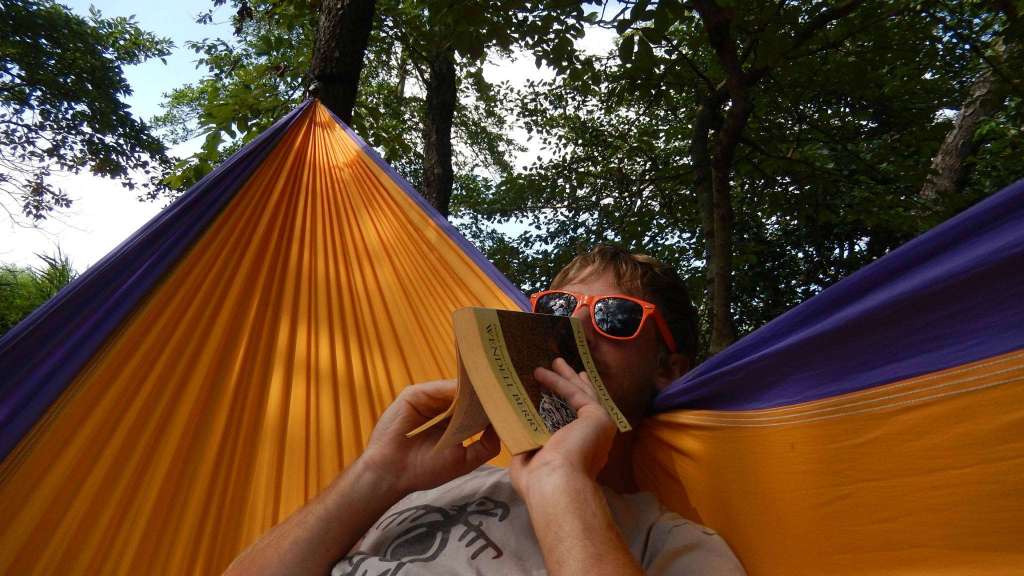
Yeah, thank you. You know, I got back to Montclair, I spent all the money I made that summer, I was like “Oh, that was supposed to be my food money for the next year,” so I wound up having to get a job washing dishes at the bar off-campus, and doing this, that and the other. But I got back and my friend Sean Reo, lives in Philly now, is a blog writer as well actually, and a super talented musician…I was like “Hey man, I know you’re super into music, think you could record this for me?” And he was like “I’ve never done this before, but yeah, sure.” And he laid down the lead guitar and the bass, my friend Garrett played the drums. It was my first time trying to pull a project together and it was great, it was a good time.
This article originally appeared on the Wix site.

